Dream Processing Unit
Dream Processing Unit (DPU) is an art-science project developed during the hackathon “Hypersensual Overclocking: Making Machines Feel”, organised by Umanesimo Artificiale and Yaya Labs (Ben Ditto, Siana-Leann Douglas, Mario Guzman, Desdemona) in Fano, June 19-21, 2024. Goal of the event was to explore and gather ideas on how to augment the sensory capabilities of robots, bringing together teams of engineers, researchers, designers, humanists using Desdemona as the reference testing platform.
DPU epxlores the realm of dreams and sleep, whether they make sense as for an always-on, always-connected machine, and, if yes, how they can be experienced and how they can influence the behaviour of the system. The working team was composed by me, Pietro Forino, Martina Borgese, Sebastiano Motta, Giovanni Maria Occhipinti. DPU has been conceived and prototyped in the 36 hours of the hackathona and has been assigned the 1st prize.
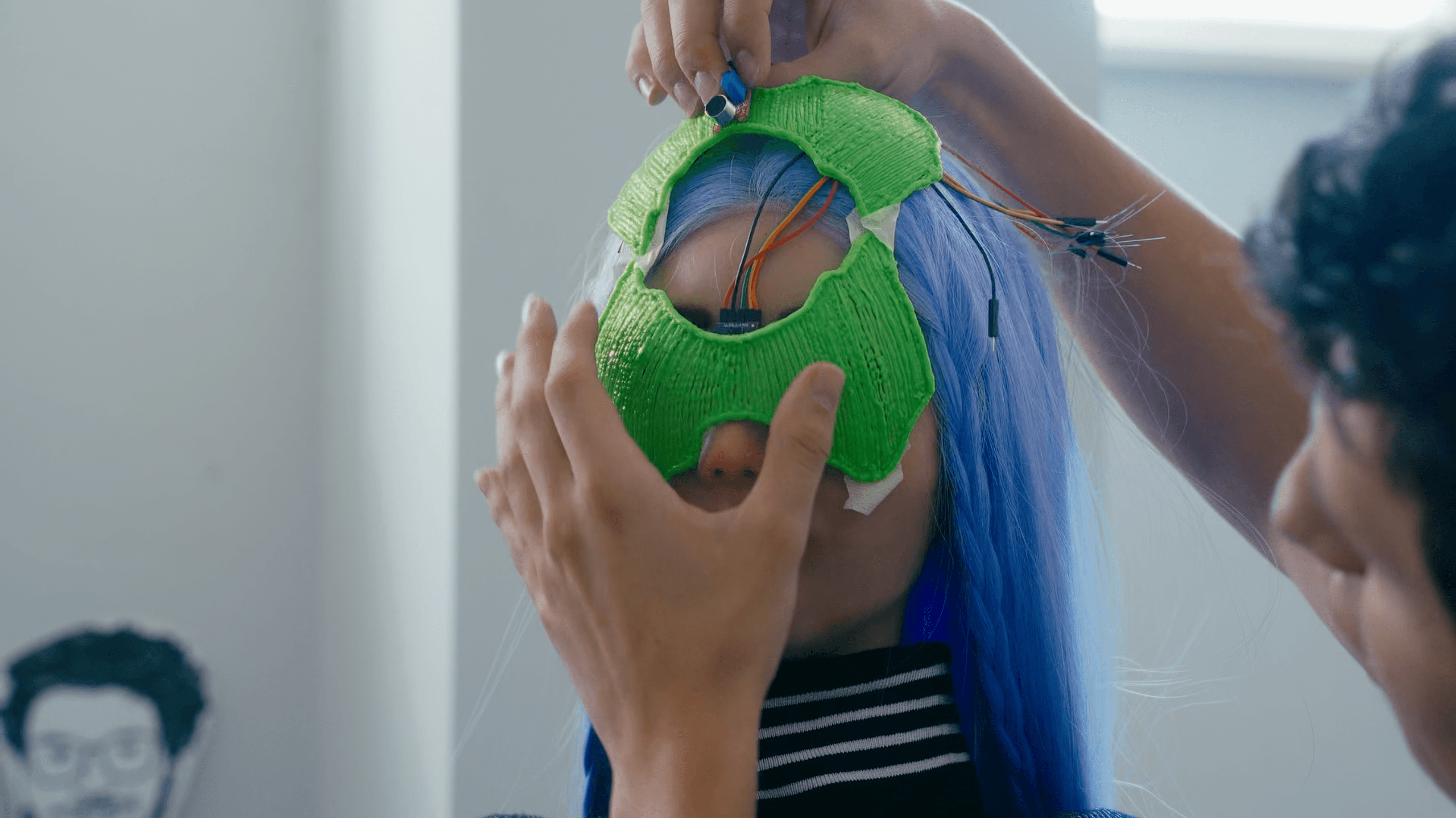
Concept
The concept of DPU comes from the fact that Desdemona, using resource-intensive algorithms and compute platforms, require to be turned off after a certain period of continuous use, similarly to the rest and sleep the human body requires. Continuing this analogy, we reimagined such periods from an “hindering” downtime to an opportunity of creative exploration, for instance revisiting actions and conversations happened during the day, exploring alternate paths, and simulating a sub-conscious emotional layer that reacts to environmental stimuli. A source of inspiration was also DeepMind’s research on replay.
As a result we designed the DPU as a symbiothic companion device (a robot’s wearable) enabling environmental sensing and processing during the robot’s downtime and idle periods. By collecting environmental telemetry, sampling past experiences, and connecting to global data streams (such as geo-vulcanic activity, news, weather forecast), an internal emotional state is evolved, based on a multi-dimensional model of affect. Shifts in the emotional dimensions are recorded and used, together with sampled data, to generate a series of dreams through a Language Model. In this context, dreams are represented as linguistic narratives, which are fed back into the robot to derive an influence on the future behavior or conversations. Waking up, the robot can remember the night’s dreams, update its internal state based on their emotional content, and use it as a transfer function for any future decision. Dreams are stored in a database, to enable inspection, and to allow for visualisation through an image generation layer, to communicate also to a human audience what the robot has dreamt.
Architecture
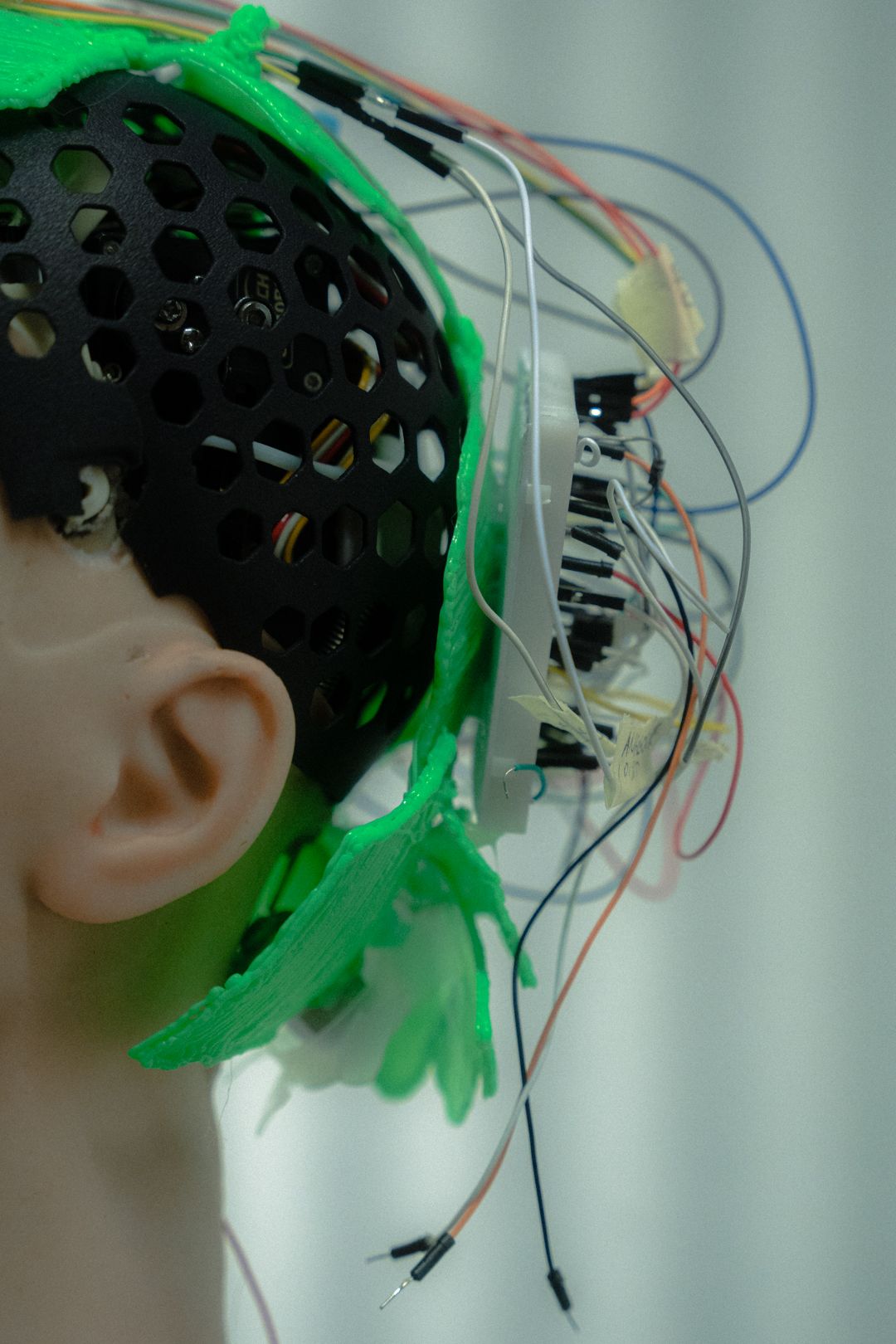
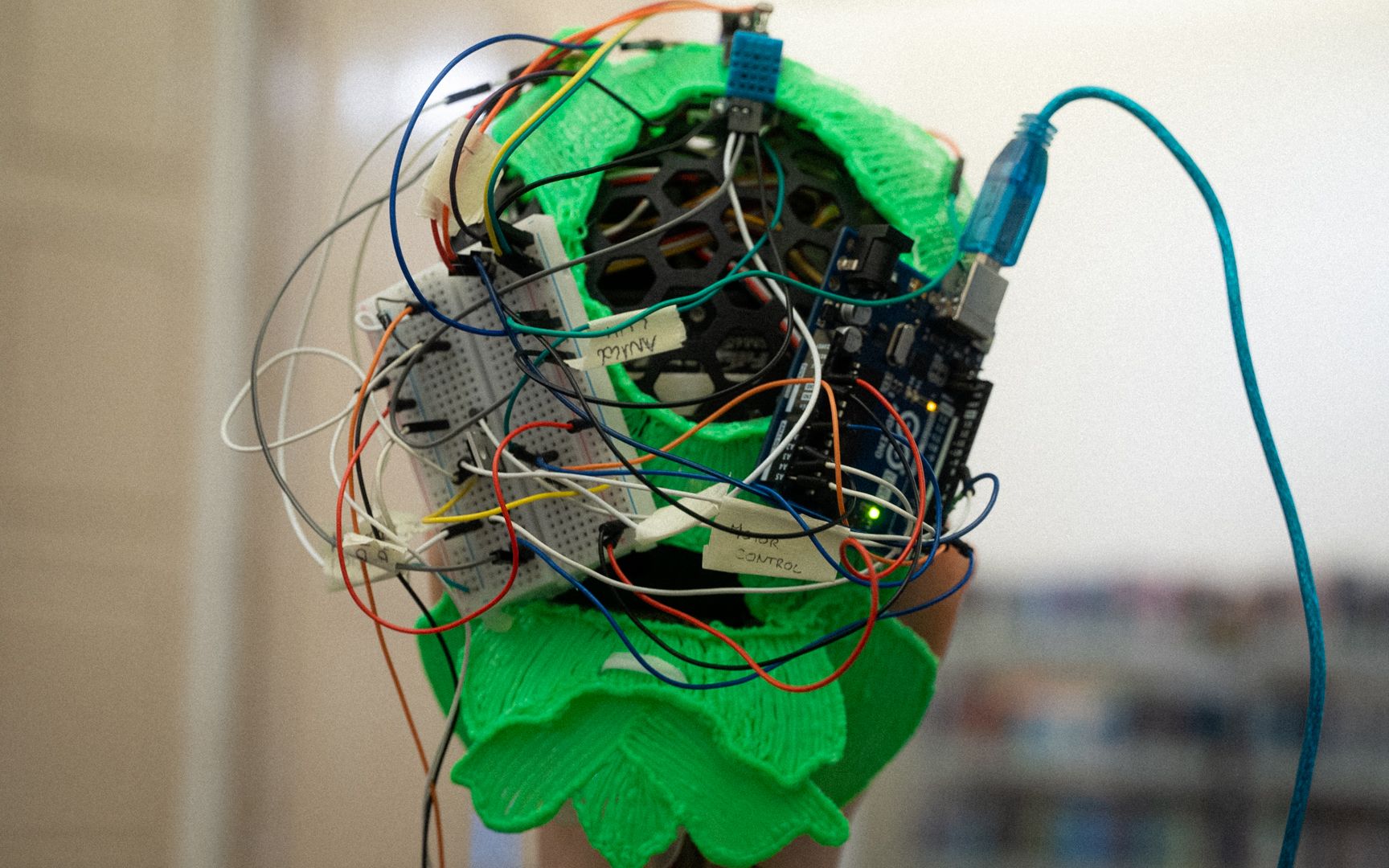
The DPU prototype, shown in the picture, is implemented as a modular system, where hardware and software modules can be seamlessly plugged in, replaced, and upgraded. From a logical perspective, the control software is a distributed network of sensors, some local, some remote, orchestrated by a software controller.
Heavier pipelines, such as emotional layer simulation and dreams generation, are deployed on a traditional CPU, whereas an Arduino controller, connected through a serial channel, acts as a sub-system controller for the physical sensors and actuators.
The modular nature of the system allows it to be deployed on any kind of robotic platform with minimal adjustments, abstracting the conceptual framework from the specific embodiments of the hosts.
A summary of the event, and a recording of our project pitch, is available in the video below.
Pictures and videos courtesy of Vladimir Bertozzi